
More people now rent instead of own. Fuel, licences, insurance, repairs, washing and parking add up, and ride-hailing, car sharing, subscriptions and leasing make ownership less necessary. Rental fleets grow, and spreadsheets, phone calls and manual checks no longer keep up. Here is how one rental company took control with GPS tracking.
Results at a glance
- 15–20% less time spent on fleet management
- Faster turnaround between customers, so higher utilisation
- Better protection against theft and misuse
The challenge
The company rents cars, SUVs, trucks and buses for business and leisure, from about USD 20 to USD 400 a day. A broken, misused or stolen vehicle costs far more than that. Its daily problems:
- Dangerous driving. Visitors driving by their home country's rules, and locals driving flat out, cause accidents and extra wear.
- Theft. Criminals rent cars with fake documents. After a couple of hours, the chance of finding the car is close to zero.
- Planning. Late returns without notice and slow pre-rental checks wreck the schedule and frustrate the next customer.
- Maintenance. Checking licences and condition by hand works for a dozen cars, not a hundred.
- Rental terms. Limits on area or mileage cannot be enforced without GPS.
The solution
KLOUDIP fitted trackers suited to each vehicle type, plus engine immobilisers and fuel level sensors. Everything connects to FiOS, which supports thousands of device models, so the company can add new hardware later without changing software.
Live tracking
Staff can find any rented vehicle at any moment, follow it live, and share its position with security staff or the police if it is stolen.
Movement history and remote odometer
Many agreements limit distance or area, such as staying within one province. When a customer breaks the terms, often without realising, the system alerts staff, who can call the customer, change the agreement or prevent penalties.
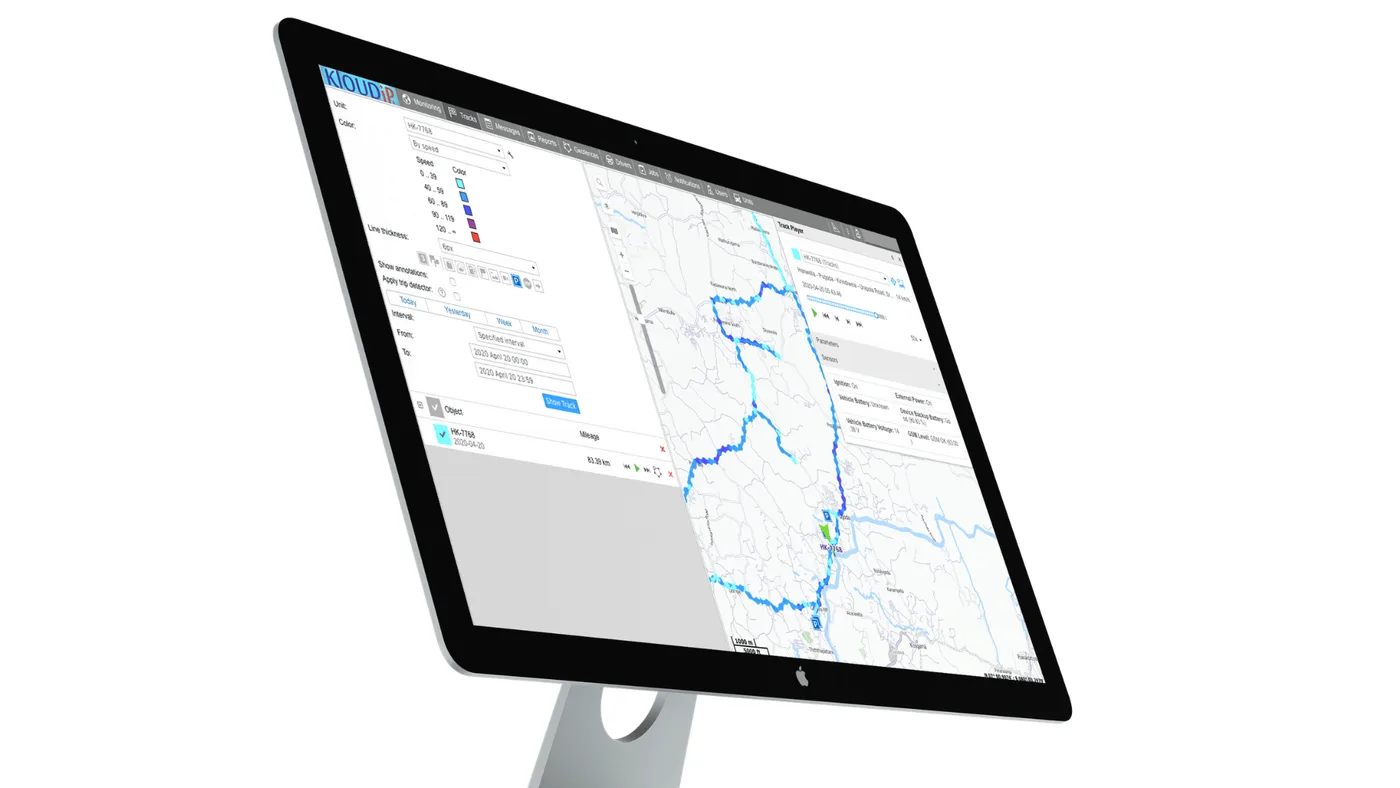
Movement history in FiOS
Geofences and engine immobiliser
If a car leaves the permitted area or is driven recklessly, it may be stolen. Staff can share its location with the police, or stop the engine remotely before it gets far.
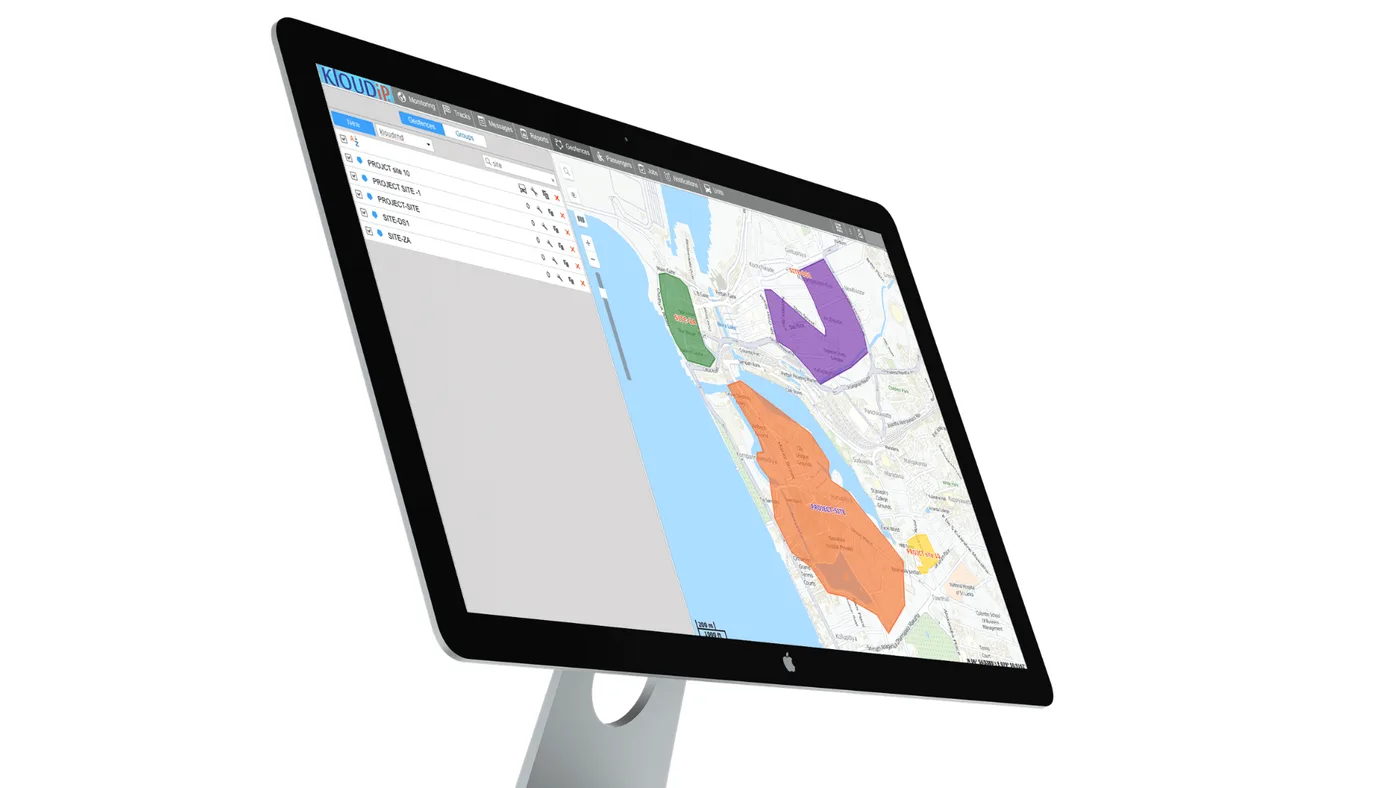
Geofences in FiOS
Maintenance
Service due dates, mileage, costs, parts and fuel level are all in the system. Staff only need a quick visual check before handing over a car, so customers get their vehicles faster and service time is planned in.
Driving style
Trackers with accelerometers report harsh acceleration, braking, speeding, sharp turns and accidents. Staff can call a reckless driver straight away, or reward careful customers with loyalty discounts.
Alerts
Violations, services, licence renewals and the end of each rental period all trigger alerts, so staff spend their time on customers instead of watching screens.
The results
- 15–20% less time spent on fleet management, with most processes automated.
- Faster returns and remote condition checks, so cars go back out sooner and utilisation rises.
- Better security, which lets the company plan growth with less risk.
Frequently asked questions
Can a rental company stop a stolen car remotely?
Yes, with an engine immobiliser connected to the tracker. Staff can stop the engine from the web or app and share the location with the police.
Can we enforce mileage or area limits?
Yes. Geofences and remote odometer readings alert staff when a car leaves the agreed area or exceeds the agreed distance.
Does it work for trucks and buses as well as cars?
Yes. Different trackers suit different vehicles, and all of them report to the same FiOS system.
Talk to us
Run a rental fleet? Tell us your challenges and we will show you the system on a few of your own vehicles. Contact KLOUDIP
First published on KLOUD LIVE in August 2021. Updated and revised in November 2026.