
When a patient calls for help, minutes matter. US hospital research reported by ASC Communications found response times ranging from just over a minute for critical heart alarms to around eleven minutes in general paediatric wards. This is how a private hospital in Colombo started measuring every one of those minutes.
Key takeaways
- The hospital kept its existing call buttons and LED panels.
- An IoT hub connects them to software that shows every room at once.
- Response times are recorded and reported daily, giving objective data for every complaint.
The challenge
A private hospital with more than 300 patient rooms was bringing technology into every part of its work. It already tracked more than 100 lab sample vehicles with KLOUDIP fleet management and monitored temperature and humidity in all its pharmacy warehouses. Next came nursing.
When a patient feels unwell, they press a button by the bed and wait. Fast response is part of the hospital's service promise. If a patient complains, the hospital needs the actual response time as evidence, to defend its nurses or to act. Its reputation depends on it.
The solution
KLOUDIP designed a nurse response system on its IoT platform and telematics hardware, while keeping the equipment already installed.
Hardware
Each bed has a call button linked to an LED panel in the nurses' station that shows the room number. The nurse switches off the alarm on arrival; the time in between is the response time. KLOUDIP connected the buttons and panel to an IoT hub that sends every event to the software. Integrating the older call system with a modern hub was the main technical challenge.
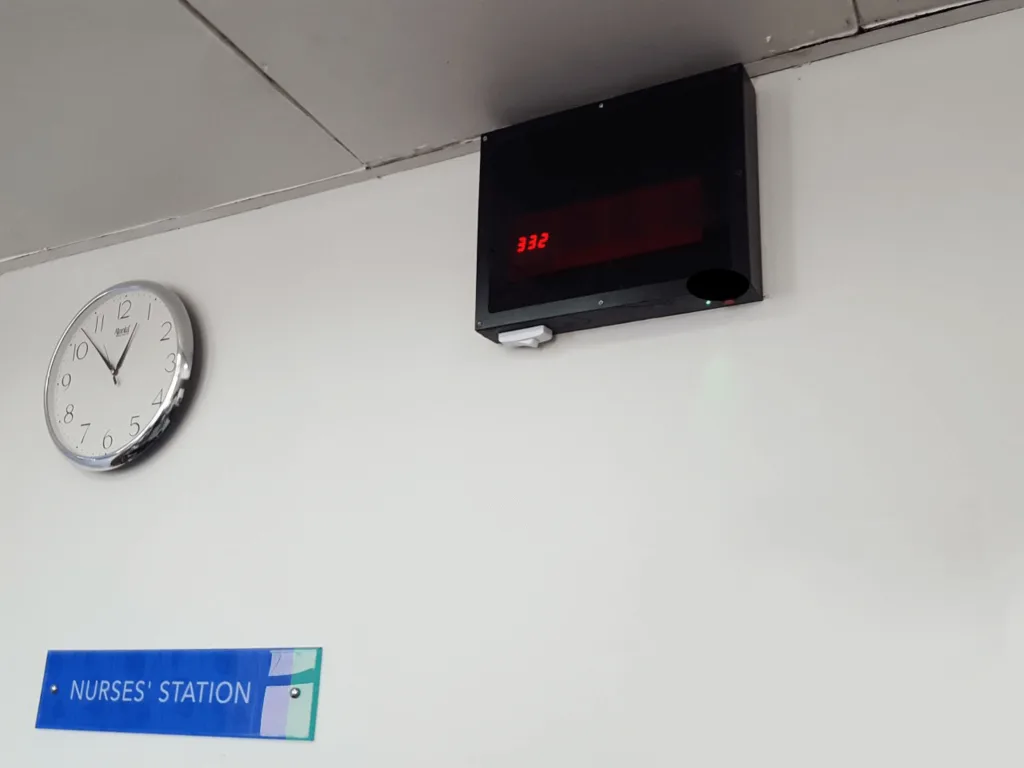
A patient needs a nurse in room 332
Software
A dedicated interface shows the call status of every room in the hospital on one screen, instead of one room at a time on the LED panel.
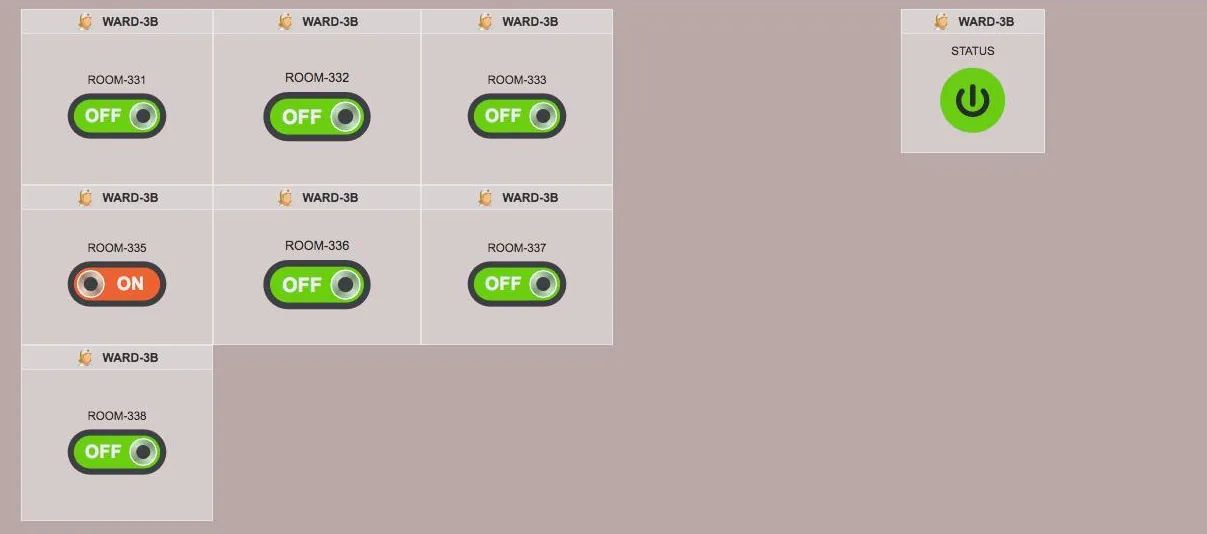
Every room on one screen
In the background, the system records every call and response, and sends managers a report every morning. Managers track late responses and study call patterns by room to balance nurses' workloads. The data is kept for future reference.
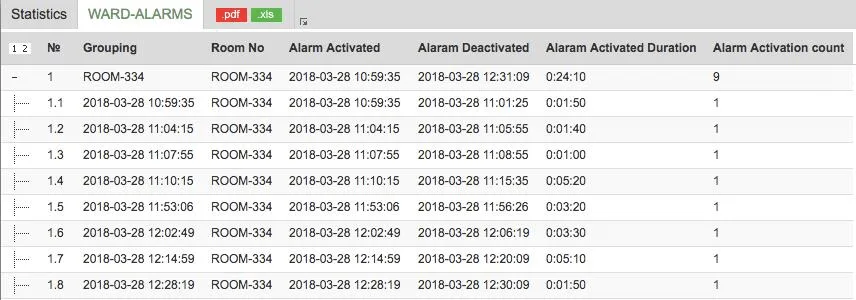
Daily response time report
The results
- Better service. Patients are attended to faster, and staff spend their time on care instead of disputes about response times.
- Faster response. Staff see calls on a phone or laptop without having to be at the nurses' station.
- Balanced workloads. Nurses are assigned according to real call patterns.
The same approach works wherever there are requests to answer: maintenance, assistance or security. It uses the same technology as HAZER's patrol guard control.
Frequently asked questions
Do we need to replace our nurse call system?
Not necessarily. In this case the existing buttons and panels were connected to an IoT hub.
How is response time measured?
From the moment the patient presses the button to the moment the nurse switches off the alarm in the room.
Who receives the reports?
Managers receive an automatic daily report and can view the full history at any time.
Talk to us
Need to measure response to any kind of request: care, maintenance or security? Let us show you how. Contact KLOUDIP
First published on KLOUD LIVE in January 2020. Updated and revised in November 2026.